






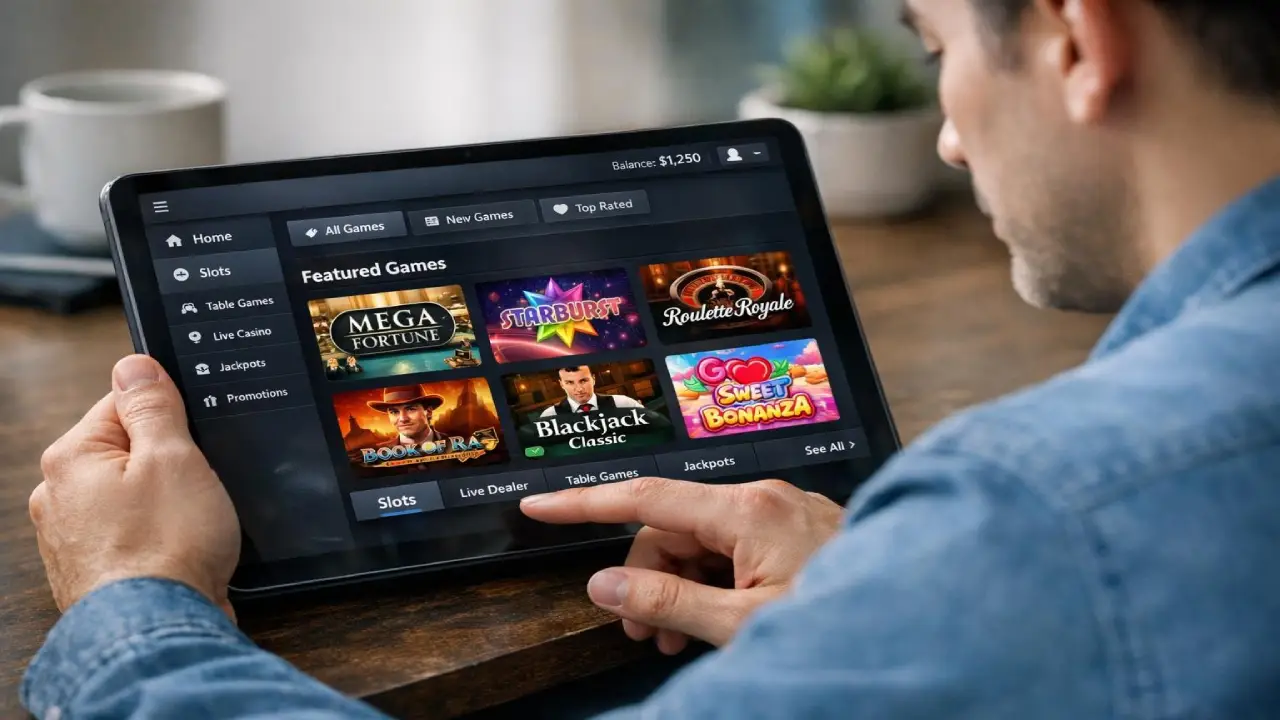

The first screen a player sees after logging into a casino platform is not a game. It is a lobby. And that lobby, whether it belongs to a sprawling Las Vegas resort or a mobile-first iGaming app, is one of the most carefully engineered interfaces in the entire operation. Every category tab, every thumbnail position, every filter option, and every algorithmically generated recommendation row exists for a reason. Game organization is not a matter of convenience. It is a structural discipline that directly shapes the player journey, influencing what people play, how long they stay, and whether they come back.
Understanding how game organization works at the platform level reveals a layer of design thinking that most players never consciously register but always respond to. From the broadest category labels down to the micro-placement of a single slot thumbnail, every choice reflects a set of assumptions about player psychology, session flow, and commercial strategy.
How Game Organization Evolved: From Physical Floors to Digital Lobbies
In a traditional brick-and-mortar casino, game organization is a spatial problem. Slot machines occupy zones grouped by denomination or theme. Table games sit in a central plaza, arranged by type: blackjack in one cluster, roulette in another, poker in a roped-off section with its own atmosphere. The logic is partly operational, dealers specialize by game, and partly behavioral, players who prefer one game type tend to gravitate toward a recognizable zone.
The shift to digital game organization
When gaming moved online, the spatial constraint disappeared but the organizational challenge intensified. A physical casino might offer 2,000 slot machines and 150 table games. A major online platform can host 4,000 to 8,000 titles from dozens of providers. Without a clear organizational structure, that volume becomes noise. The lobby had to become a navigation system, and game organization became the primary tool for converting a passive visitor into an active player.
Early online casinos used simple flat lists sorted by provider or alphabetical order. Modern platforms treat game organization as a UX discipline on par with e-commerce product merchandising, borrowing techniques from Netflix, Spotify, and Amazon to surface the right content at the right moment.
Category Architecture: The Backbone of the Player Journey
The most visible layer of game organization is the category system. Nearly every platform divides its library into top-level categories that serve as the player’s first navigational choice.
Standard category taxonomy
| Category | Typical Contents | Player Profile It Attracts |
|---|---|---|
| Slots | Video slots, classic slots, jackpot slots, Megaways | Casual players, high-volume session seekers, jackpot chasers |
| Live Casino | Live blackjack, roulette, baccarat, game shows | Social players, those seeking authentic atmosphere, higher-stakes users |
| Table Games | RNG blackjack, roulette, poker, baccarat | Strategy-oriented players, those who prefer pace control |
| New Games | Recently added titles across all types | Explorers, novelty seekers, experienced players looking for fresh content |
| Popular / Trending | Highest-played titles in a rolling window | Social-proof-driven players, newcomers seeking guidance |
| Jackpots | Progressive and fixed jackpot games | Dream-driven players, those motivated by outsized potential payouts |
This taxonomy looks simple, but the decisions behind it are anything but. Which categories appear in the top navigation bar versus a dropdown menu determines visibility. The order of tabs matters: platforms consistently place their highest-margin or highest-engagement category first, which is almost always Slots or Live Casino. A category that requires an extra click to reach will see measurably lower traffic, a principle that makes top-bar real estate one of the most contested design decisions in platform management.
Sub-Categories and Filters: Guiding the Player Journey Deeper
Below the top-level categories, game organization becomes more granular. This is where the player journey shifts from broad browsing to targeted selection, and where platform design has the greatest influence on what a player ultimately chooses.
Common filtering dimensions
- Provider: Lets players find games from a preferred studio (NetEnt, Pragmatic Play, Evolution). Provider loyalty is stronger than many operators realize, and surfacing this filter prominently serves retention.
- Volatility: Some platforms now expose volatility ratings (low, medium, high), allowing players to self-select based on risk appetite. This is a relatively recent addition to game organization that reflects growing demand for transparency.
- RTP range: A handful of platforms allow filtering by return-to-player percentage, giving informed players a tool to align game selection with their strategy. Regulatory pressure in markets like the UK is pushing more operators toward this level of disclosure.
- Theme: Filters for Egyptian, adventure, fruit, mythology, and other visual themes help casual players find content that appeals to their aesthetic preferences, often the dominant selection criterion for non-strategic slot players.
- Features: Bonus buy, free spins, cascading reels, multipliers. Feature-based filtering serves experienced players who know exactly what mechanic they enjoy and want to find more games that deliver it.
The depth and quality of these filters directly impacts the player journey. A platform with poor sub-category game organization forces users to scroll endlessly or rely on search, both of which increase friction and drop-off. A well-structured filter system, by contrast, makes the lobby feel curated rather than overwhelming, even when it contains thousands of titles.
Algorithmic Game Organization: Personalization at Scale
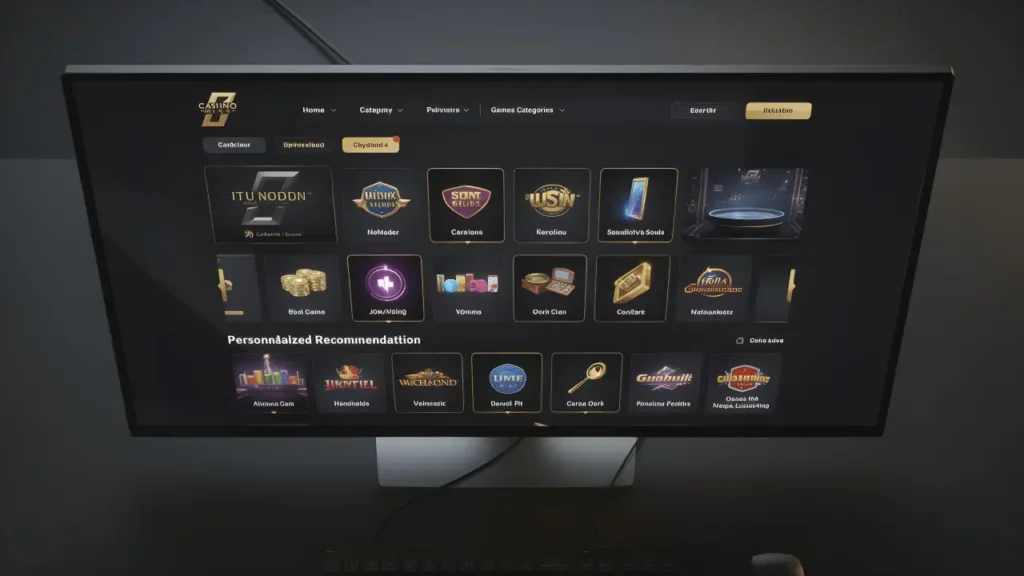
The most sophisticated layer of modern game organization is invisible to the player: algorithmic recommendation. Drawing on the same principles that power content discovery on streaming platforms, casino lobbies increasingly use machine learning to personalize what each player sees.
How recommendation engines shape the player journey
A first-time visitor and a returning high-roller should not see the same lobby. Recommendation systems analyze behavioral signals, including games played, session length, bet size, time of day, device type, and deposit history, to construct a personalized view of the library. The “Recommended for You” row, now standard on most major platforms, is the most visible output of this system, but personalization often extends further. Some platforms dynamically reorder category contents, promote specific thumbnails to prominent positions, or adjust which games appear “above the fold” based on individual player data.
| Signal | What It Tells the Algorithm | How It Affects Game Organization |
|---|---|---|
| Last 10 games played | Current preferences for theme, volatility, and provider | Similar titles promoted to top positions in relevant categories |
| Average bet size | Player’s risk tolerance and bankroll level | Games with matching stake ranges prioritized; high-limit games surfaced or hidden |
| Session duration pattern | Whether the player prefers short bursts or extended sessions | Quick-play games promoted for short-session users; feature-rich games for marathon players |
| Device type | Mobile vs. desktop usage patterns | Mobile-optimized titles prioritized on smaller screens; complex UI games shown on desktop |
| Time since last visit | Engagement recency and potential churn risk | New releases and bonus-eligible games promoted for returning lapsed players |
This level of personalized game organization creates a lobby that feels relevant without the player understanding why. The experience of finding something appealing within seconds, rather than scrolling through pages of unfamiliar titles, is a direct product of how well the recommendation layer is calibrated.
The Player Journey as a Designed Sequence
When all layers of game organization work together, they create a player journey that feels natural but is, in fact, a designed sequence. The path typically follows a predictable arc.
Stages of the player journey through game organization
- Entry: The player lands in the lobby and is immediately presented with the highest-impact category. For new users, this is often “Popular” or “Top Games,” which leverages social proof. For returning users, it is “Continue Playing” or “Recommended,” which leverages personal history.
- Exploration: The player browses within a category, using filters or scrolling through curated rows. Game organization at this stage must balance variety with coherence, showing enough options to feel abundant without creating decision fatigue.
- Selection: The player clicks a game. Thumbnail design, title placement, and contextual information (provider logo, jackpot counter, “Hot” or “New” badges) all influence this micro-decision. The position of a game within the grid is often more important than the game itself.
- Transition: After a session ends, the platform presents a transition screen with related games, similar titles, or a prompt to try a different category. This is game organization at its most active, attempting to convert a completed session into a new one rather than an exit.
Each stage is a potential drop-off point where poor game organization can lose a player. A cluttered lobby loses them at entry. A shallow filter system loses them during exploration. A poorly merchandised grid loses them at selection. And a missing or weak transition screen loses them after their first session ends.
Why Game Organization Is a Competitive Advantage
In a market where multiple platforms often carry the same games from the same providers, the differentiator is rarely the content itself. It is how that content is organized, presented, and personalized. Two platforms hosting identical libraries of 5,000 games can deliver fundamentally different player journeys based solely on how their game organization is structured.
Operators who treat game organization as an afterthought, a simple database query that dumps titles into a grid, consistently underperform on engagement metrics compared to those who invest in category architecture, filtering depth, recommendation algorithms, and transition design. The lobby is not a waiting room. It is the first move in a conversation between the platform and the player, and the quality of that conversation determines everything that follows.